


Training & Behavior
Crate Training: Should You Leave Water in Crate at Night?
Establishing that dogs should be sleeping in the crate is the easy part - determining what to leave…
February 9, 20224 min read

Crate training has a lot of ups and downs that come with it - but it’s well worth it in the end.
One of the most gut-wrenching difficulties in crate training for most pet owners is to hear their puppy cry and whine when they leave. Not only can this be a serious nuisance if you reside in a shared-living space like a condo or apartment, but it can also be troubling for your dog.
Puppies cry instinctually out of loneliness or discomfort. The best way to stop this is to teach your puppy to be alone. Make the crate a good thing, leave plenty of toys, use treats and positive reinforcement, stimulate the body and mind, and do it all gradually with patience.
In this article, I will help you work through your puppy crying in the crate when you leave, offering plenty of advice and ideas to help remedy the whining.
Hopefully, after implementing everything, your puppy will learn to not be afraid of being alone in their crate!
Ready? Let’s begin.
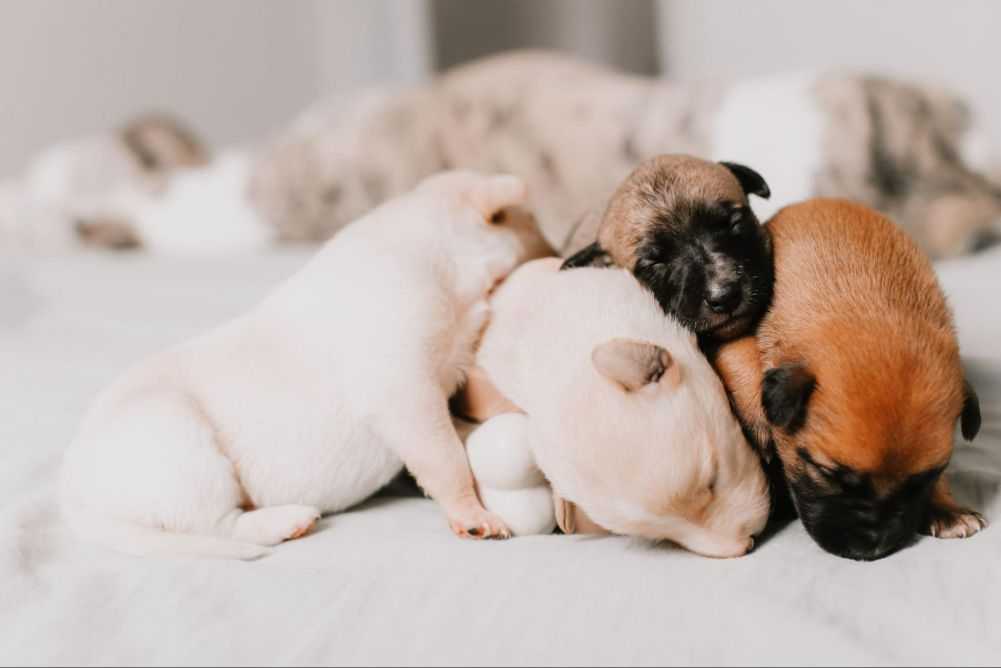
Think of it this way, all your puppy has ever known before you is being around their mother and siblings.
Suddenly, they are taken away from the only environment and only companions they had been familiar and comfortable with and plomped right into your house.
Not only is this a scary change for a little puppy, but they might be feeling a bit lonely too.
Instinctually, a puppy will cry when alone, hoping that either their mother or siblings will come to them. It’s a bit of a leftover biological safety net from when dogs were wolves to ensure they don’t get separated from their pack.
It’s a sad and emotional aspect of getting a puppy many of us don’t think or consider.
As such, ignoring your puppy when they are crying in the kennel may not actually be the right way to go about calming the behavior despite being a common suggestion.
It’s better to teach your puppy that it’s okay to be alone.
That being said, you don’t want to reinforce the crying either. Instead of ignoring your crying puppy completely, wait for a 10+ seconds gap in the crying. Only then give some attention and calm them down.
The real challenge presents itself when you are teaching your puppy that being alone is nothing to be scared, worried, or alarmed about.
Remember, this takes some patience, but it’s well worth it when you have a calm and happy dog you can constantly leave at home by themselves.
Here are a few ways to teach your puppy that being alone equals a good thing.
First thing’s first: you need to succeed in getting your puppy to associate the crate with something positive.
Going back to the basics of crate training, your goal is to make the crate valuable.
Try feeding meals, giving treats, or doing something fun in the crate, so that there is a positive association there for your puppy. Use the crate as a nap spot and a place to chew on yummy toys.
The more comfortable and happy your puppy is with their crate, the less uncomfortable they feel when left alone.
Consider this, wouldn’t you feel unhappy if someone locked you in a room you weren’t familiar with and walked away?! Your puppy interprets the world in a very similar way.
As much as we humans try to rush things to reach our end goals fast, that doesn’t quite work with babies (human or animal).
As such, you can’t just leave your puppy for two hours right off of the bat and expect no consequence. Teaching alone time is gradual and takes some patience.
Try leaving your puppy alone for just minutes at a time, coming back to calmly reward quiet behavior with treats and praise.
Puppies want to be told that they’re doing good, so consistently reinforcing what you want them to do is a big deal. Rinse repeat.
Eventually, you’ll be able to increase the time your puppy is alone, and they’ll keep associating being calm and quiet with something good. It can even get to a point where their body becomes conditioned to relax in their kennel!
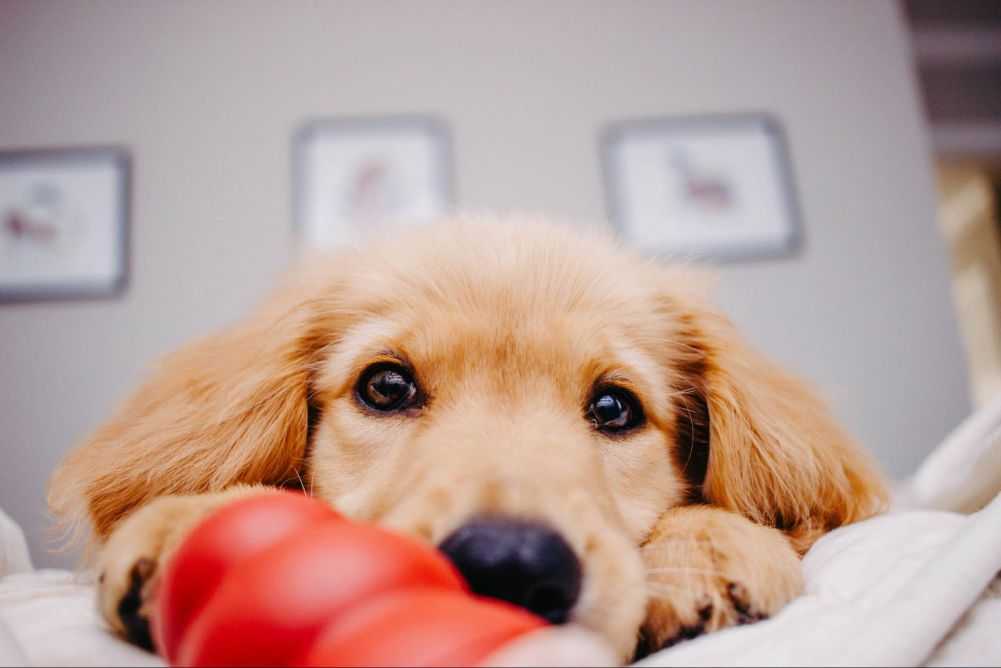
When in doubt, a Kong toy stuffed with peanut butter should do the trick!
In all seriousness, leaving your puppy with an activity is a sure way to keep your four-legged little one too preoccupied to cry in their kennel.
Not wanting to be alone can be just as much about boredom as it is about companionship, so providing something to occupy your puppy’s brain when you’re gone is a tremendous relief.
Plus, your puppy will associate your absence with an activity they actually enjoy! Look at toys you can fill with treats or something that tastes good to chew.
Sometimes, crying when you leave has more to do with your puppy being concerned they won’t be let out to potty than it does with you being gone. This is because puppies very quickly begin to associate you with the source of being let outside to relieve themselves, and most puppies really don’t want to sit in a soiled crate.
Young animals don’t have very good bladder control, so timing crate time after a potty break and scheduling potty breaks in there might just be what helps alleviate the anxiety of being alone. It’s recommended in general to crate on a schedule and even more so in this scenario.
Speaking of crating on a schedule, be sure to add in some walks and mental stimulation.
A tired dog is a good dog, and being gone is less traumatic if your pup plans to take a nap because they’re tired.
If you don’t have time for a walk before each crating period, why not teach your puppy a new trick? Even just 15 minutes of working their brand can exhaust a young puppy into a long sweet nap, leaving you well at ease.
The ones people read straight after this.
Establishing that dogs should be sleeping in the crate is the easy part - determining what to leave…
Bringing home a puppy is such an exciting time in any pet owner’s life - you get to raise a brand…
With each adorable puppy antic comes some strange ones - like digging while inside of their crate…
Whether you’re a brand new puppy owner or adding another furry family member to your existing…
Of all the crate training steps, the simplest turns out to be the hardest: getting your dog inside…
Although crate training sounds fairly simple and straightforward in theory, it can be a whole…


